
Over the years, I have worked with a bunch of different scales for both espresso and pour over coffee, and in this guide, I have selected some of the most interesting options on the market.
Don’t worry – you don’t need the most expensive one out there! Any of these in this article will do just fine.
However, coffee is about precision.
If you want to go from good to great brews consistently, you’ll need a scale.
Otherwise, it will just be guesswork.
Straight to the Point
My 2024 top pick for coffee scales is the Timemore Black Mirror Pro.
It looks great, has the essential features, and charges via USB C. It’s also much more affordable than certain other brand names. On the other hand, if you need a grinder that works well for espresso duties, then get the Black Mirror Mini. It’s basically the same scale – just shrunken down enough to fit on the drip tray of an espresso machine.
About my top picks
A coffee scale is a special tool, because it’s pretty easy for any digital scale with a built-in timer to perform reasonably well. So when I’m pointing out my favorite coffee scale and espresso scale here, it’s more about the small details and above all; the value.
These are some of the things that I think are essential for a good coffee scale in 2024:
- A timer
- USB C charging
- A boxy “shell design” where the weighing plate is sheltered for water
- A clear display
- Aesthetically pleasing
In recent years, the influx of new brands has driven prices down, benefiting us consumers.
We now have access to options that are not only functional and good-looking but also surprisingly affordable.
So in fact, most of the scales in this article live up to the criteria above.
This is a significant shift from just a few years ago when the choices were more limited and acquiring a decent espresso scale meant spending a small fortune.
If you run a coffee shop where the scale is a piece of equipment that is used constantly throughtout the day, it probably still makes sense to invest in the Acaia Lunar.
However, for most home baristas, the affordable models from Timemore and SearchPean are particularly attractive due to their cost-effectiveness.
My top pick: The Ideal Coffee Scale
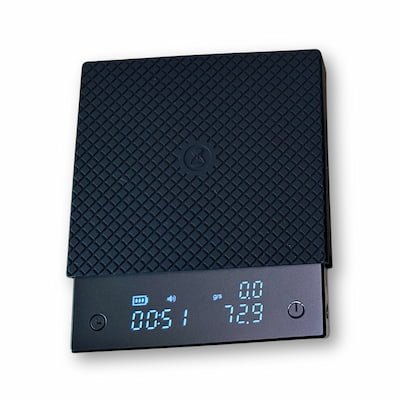
Timemore has finally updated the Black Mirror scale to an even more advanced and sturdy version.
This model comes with flow rate, timer, and a battery that’s rechargeable via USB C.
It’s beautiful and functional.
Amazon AliexpressThe Timemore Black Mirror has been a favorite for manual brewing for several years, thanks to its eye-catching design and reasonable price. With the introduction of the “Pro” version, it still seems like a wise investment for the future if you’re mainly brewing filter coffee.
SearchPean, a relatively new brand, specializes in compact espresso scales. Between their two models, I have a slight preference for the 2S version, primarily for aesthetic reasons; the all-white digits on the display are simply more appealing than the mix of red and white found on other models.
While all the espresso scales discussed in this article are excellent choices, the cost-effectiveness of the Tiny2S scale makes it a standout selection.
WHY USE A SCALE WHEN BREWING COFFEE?
The flavor of coffee changes depending on the ratio of coffee and water you use.
Certain beans and brew methods really shine at the standard 1:15 ratio of coffee to water, while others require a totally different approach: perhaps a 1:17 ratio is better.
The main takeaway though is this: You need to be able to measure both beans and water in order to hit your ideal ratio.
While this can be done to a certain degree by using volume measurements (like with a tablespoon scoop), it will never be accurate unless you use a scale and measure out the exact mass of both the coffee and the water.
This is because different beans and different roasts produce beans with different densities. Therefore, beans with the same volume may have completely different masses and cannot be compared with volume.
BE CONSISTENT
Knowing exactly how much coffee and water you are using will allow you to either remain completely consistent once you have a cup you know you enjoy or allow you to change different parameters accurately if you want to try something else.
If you don’t trust me, then here’s the opinion of coffee pioneer James Freeman of Blue Bottle:
“Volume is a less accurate way of measuring things than mass is. That’s not an opinion; it’s physics,” he explains in The Blue Bottle Craft of Coffee book.
“Gram measurements are more accurate, and we think using them will improve your experience as a coffee drinker and baker—and therefore improve your life. So let’s face it: you need to go the extra mile and buy a gram scale if you don’t already have one”.
So there you have it. You should really get a scale.
What to Look for in a Coffee Scale?
When it comes to brewing the perfect cup of coffee, choosing the right scale is crucial. Here’s a detailed guide on what to consider:
Digital Precision
Opt for a digital scale. Analog scales can be challenging to read, especially pre-coffee. For everyday brewing, a scale with accuracy to two decimal places is ideal, given the small mass measurements in grams.
Size Matters
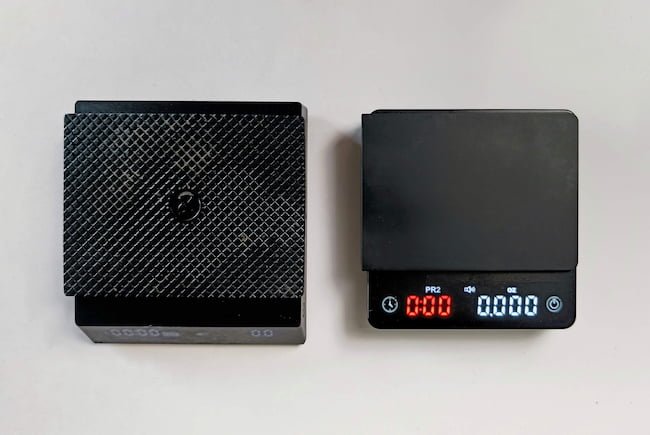
Compactness is key, especially for espresso enthusiasts. The limited space between the portafilter and drip tray on some espresso machines means smaller scales are necessary. For manual espresso makers like the Cafelat Robot and Flair 58, this is even more critical.
(See the list at the article’s beginning for scales suited to specific needs.)
Power Source
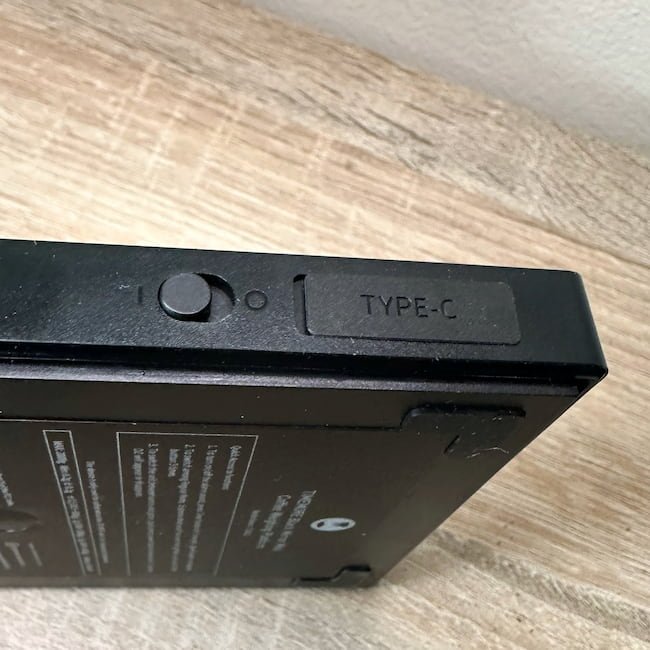
Prefer rechargeable coffee scales for their convenience and environmental benefits. Given their daily use, unlike occasional baking scales, rechargeability is crucial. Look for models with a USB-C port for easy charging, and be wary of older models with less convenient mini USB ports.
Additional Features
While a basic digital scale meets most needs, extra features can improve your brewing process:
- Built-in Timer: Useful for experimenting with extraction times.
- Flow Rate Indicator: Measures pouring/extraction speed, though not essential for everyone.
- Water Proof: Given the likely exposure to hot water, a water resistant scale is advisable.
- Auto-Tare: Some espresso-focused scales have a mode, where they will sense when a cup is being put on the scale, and automatically tare to zero. Personally, I don’t think it’s a necessary feature, but for people working in coffee shops I can see how it’s useful.
- Auto-Start: Some scales can also detect when the extraction has started and stopped. Again, this is mostly an espresso feature. I find that it can often be quite buggy, and it doesn’t account for preinfusion and other complex extraction processes, so I prefer just to start the timer when the pump is turned on.
Smart Scales
The market offers scales with Bluetooth connectivity, enabling brew tracking via an app. However, many smart scales suffer from software issues and offer limited practical benefits. Even high-end models like Acaia scales have their drawbacks. While some promise training features or various modes, truly innovative benefits remain scarce.
Auto Modes: A Closer Look
One thing I want to touch on a bit more is the auto-modes that have become increasingly common in coffee scales. Personally, I really don’t find them very useful, especially for drip coffee. Brewing a batch of pour over only takes about 3 minutes, and you only have to press the timer button a few times. The risk of the auto-on mode not working properly and messing up your time tracking just doesn’t seem worth the minimal convenience it offers.
For espresso, I can see auto-modes making a bit more sense in a busy coffee shop setting. But for home users, I still question the value. It doesn’t save that much effort, and it adds potential complications. I think it’s more repeatable to just start the timer manually when you engage the pump.
That said, if you do like the auto-timer function, it seems to work slightly better on some scales than others; for example the new Timemore Basic Mini works better compared to the old Nano. Timemore appears to have updated the software to be less responsive to the first few drips, so a pre-infusion pause is less likely to stop the timer prematurely. It also seems quicker to detect when the shot has finished based on the flow rate.
But overall, it’s a feature that some users may appreciate, but one that I personally wouldn’t base my purchasing decision on.
COFFEE SCALES: My top Picks
| Model | Espresso | Pour Over | Rechargeable | Check Price |
|---|---|---|---|---|
| Timemore Black Mirror Pro | Limited | ✓ | ✓ | Amazon Aliexpress |
| SeachPean Tiny 2S | ✓ | Limited | ✓ | Amazon Aliexpress |
| MiiCoffee Nano Pro | ✓ | Limited | ✓ | Amazon Miicoffee |
| Timemore Black Mirror Mini | ✓ | ✓ | ✓ | Amazon |
| Timemore Black Mirror Nano | ✓ | ✓ | ✓ | Amazon Aliexpress |
| Weightman Espresso Scale | ✓ | Limited | ✗ | Amazon Aliexpress |
| Huismart Coffee Scale | ✗ | ✓ | ✗ | Amazon Aliexpress |
| Acaia Lunar Espresso Scale | ✓ | Limited | ✓ | Amazon Prima Coffee |
TIMEMORE BLACK MIRROR Basic & Pro
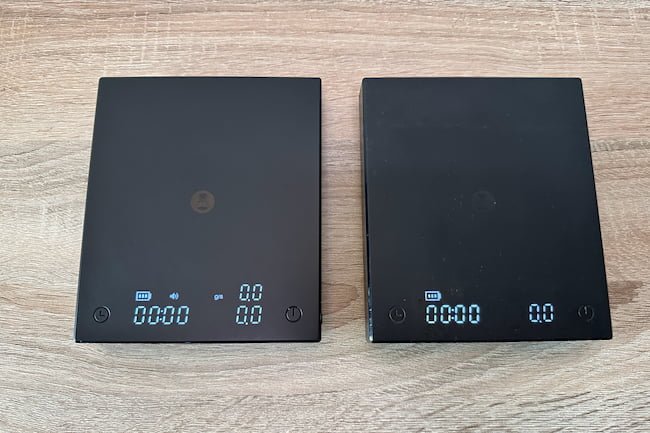
The Black Mirror single-sensor scale from Chinese brand Timemore has been my daily driver for about three years.
Now, it’s been upgraded with an even better version that has built-in flow rate and a more sturdy rubber protection mat (the one on the left on the picture).
The Black Mirror has a striking design, a bit similar to the Acaia scales, but it’s way more affordable and down-to-earth when it comes to functionality.
The UX is pretty basic in the sense that it’s just a scale with a timer (plus flow rate in the case of the “Pro” version. No fancy apps or Bluetooth connections. But that’s all you need, really.
The Black Mirror feels solid and looks great on the countertop. Over the years it has served me well.
The size of the scale is pretty good: It sits somewhere between the Lunar and Pearl, which means that you can use it for pour over as well as espresso, although some machines might have to small a drip tray to accomodate it.
The scale charges via USB-C, which is a huge relief.
Bonus-Info: While I like the new and upgraded “Pro” version, many people should also be quite happy with the standard one. The main difference comes down to a more sturdy rubber mat and the built-in flow rate.
Pros
- Built-in timer
- Charges via USB C
- Beautiful design
- Good size
Cons
- Display could react a bit faster to touch
- A bit too big for some espresso machines
SEARCHPEAN TINY1 & TINY 2 ESPRESSO SCALE
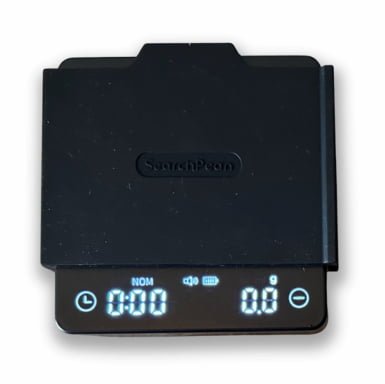
In the world of coffee scales, a new player from China has been making waves among budget espresso enthusiasts.
Known by several names, such as the SearchPean Tiny1, Miicoffee Nano Scale, and Flair Brew Scale, this versatile scale offers a lot of value for the money.
The main selling points of the scale is its compact size, making it ideal for espresso brewing. It can easily fit on any drip tray.
💡 Bonus Info: I have even tested it to fit between the legs of the Cafelat Robot and the tiny rubber drip mat of the Flair 58!
While the scale does offer some advanced features, such as an auto-timer, I find that it’s a lot more convenient to use it in its standard mode, where you manually start and stop the timer. The auto-timer function has room for improvement, and doesn’t play well with modern features such as pre-infusion, which will cause the timer to start/stop at the wrong time.
The design is simple and sleek, reminiscent of the Acaia Lunar, but it’s still unique. The button location is also more user-friendly than the Timemore Nano. The buttons are responsive, and the display is easy to read.
The scale charges via USB-C and holds its battery life for a few weeks at least. It also features a toggle on/off switch, ensuring it’s ready to use when needed.
While this scale is ideal for espresso, it does work for pour over, albeit with some limitations due to its small size. You won’t easily be able to view the display if you’re using a big carafe.
The main downside to this scale is the red digits on the display, which some users may find unattractive.
However, the newest version (called the Tiny2s) features all-white digits, addressing this minor design issue. The Tiny 2s also has a slightly more sturdy rubber mat, but besides that, I don’t notice much of a difference between the Tiny1 and 2 in daily use.
Overall, it’s an excellent option for budget espresso lovers looking for a compact, functional, and affordable scale. I like this scale and think we’ll see it pop up everywhere over the next couple of years since it’s so handy and affordable.
Pros:
- Compact Size: This scale’s main selling point is its small footprint.
- Excellent Value: Way cheaper than Acaia Lunar and other espresso scales.
- Built-in Battery: The scale charges via USB-C and maintains its battery life for weeks, making it a reliable tool for regular use.
Con:
- Display Aesthetics: The one downside of this scale is the red digits on the display.
- Auto-timer: Has issues if you use preinfusion
MIICOFFEE NANO PRO SCALE
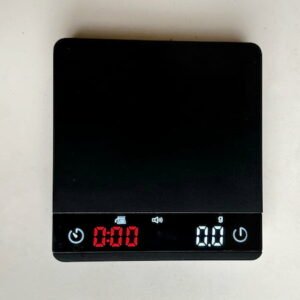
Let’s be real: This looks like a close cousin to SearchPean’s Tiny 1 and 2 scales, and probably has its origins in a similar factory in China. Nothing wrong with that; many great products come from that country.
I’ve had my hands on a lot of espresso scales, but the MiiCoffee Nano Pro Scale stands out as one of the top “value for money” options.
Thanks to its aluminum unibody, the feel of the Nano Pro is just overall better and more premium compared to the cheaper offerings from SearchPean. The buttons are also a tad bit more responsive.
The display is also a step up and a bit more clear and vibrant. Modes and icons aren’t wildly different from other affordable espresso scales, but I did notice that its less likely to enter auto-timer mode by accident compared to Tiny 2s
I got the black version. It’s sleek, but the light blue and red display numbers? I’m on the fence about those. If you’re into a cleaner look, the newly avbailble white Nano Pro might be more your style, since it keeps the digits in a more neutral color.
Calling this little guy a ‘Lunar/Black mirror killer’ might sound over the top, but hear me out. It’s tiny, it responds in a snap and does exactly what you need it to. For something that fits in the palm of your hand and feels at home on any espresso machine, that’s saying something.
The USB-C charging is a nice modern touch. You also get a silicon pad for protection that’s thicker than what you see most other brands use.
You can use it for pour over as well, but depending on your cup or carafe, it might be difficult to get a clear view of the display. Espresso is probably the ideal use case.
Oh, and I forgot to mention that there’s also a physical on/off switch. A nice touch if you want to put it in a bag of something.
Pros:
- Feels more premium than other budget coffee scales
- Buttons are very snappy – something which cannot be said about all the rivals with capacitive buttons.
- The battery life is solid, and USB-C charging is ideal.
Cons:
- The two-tone digits on the display might not be everyone’s cup of tea.
TIMEMORE BLACK MIRROR MINI SCALE
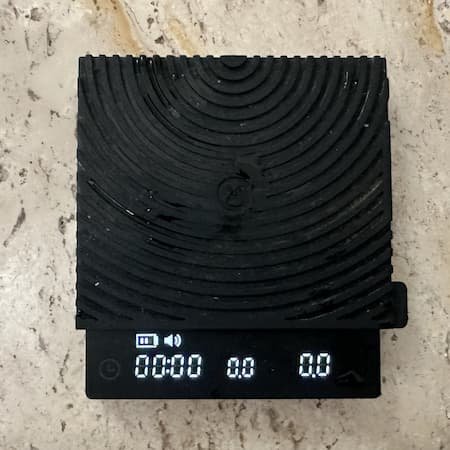
The new scale from Timemore is called the Black Mirror Mini or Black Mirror Basic Mini, depending on where you’re looking.
Despite the name alluding to it being basic, it has some pretty advanced features compared to most other scales, for example an auto timer mode.
The Mini is essentially the same as the Black Mirror Nano model (which I review in the next section), with a few key differences in layout.
The curved display of the Nano, while a great idea, required using buttons on the side of the device which was awkward in daily use. The Mini addresses this by using a more traditional flat display and button layout.
This is just speculation on my part, but I think the Mini scale is going to replace the Nano altogether.
Fortunately, the auto-timer mode seems to work better on the Mini compared to the Nano, with updated software that is better equipped to handling the first few drips during pre-infusion without stopping the shot and quicker to detect when the shot is actually finished based on a new flow rate algorithm.
Check out my video review here
Besides these changes, the Mini is almost identical in size to the Nano, just a bit slimmer. It also has a protected USB-C port, which is an improvement over the more exposed port on the Nano in terms of longevity. The Mini retains the rubber mat that also doubles as a base to rest your portafilter on the scale to weigh your dose if you flip it around.
Overall, the Black Mirror Mini is a nice incremental upgrade over the Nano. Its size also makes it pretty versatile, big enough to accommodate a carafe for drip coffee while still being able to see the display, and compact enough for espresso.
This is one of my favorite espresso scales in 2024. If you are on a tight budget or require an even smaller size then the SearchPean 2s is the better choice, but if you want a nicer design and better allround performance, I think you should go for this scale.
Pros:
- Improved button layout compared to the Black Mirror Nano
- Auto-timer mode works better than previous model
- Protected USB-C port for better longevity
- Decent size for both espresso and drip coffee
Cons:
- Auto-timer mode may still not be useful for all home users
- Naming convention is a bit confusing – the Mini actually being slightly slimmer than the Nano.
TIMEMORE BLACK MIRROR NANO
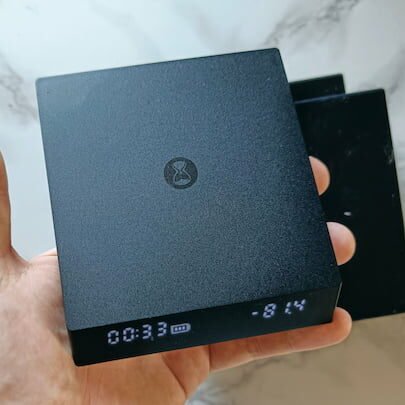
This is Timemore’s first dedicated espresso scale, but it looks like it might disappear from the brand’s line-up soon with the release of the Black Mirror Basic Mini scale, I review in the section above.
The Nano follows the same futuristic design language as the rest of the Black Mirror scales but brings a few awesome innovations to the table.
It has a stunning design with its angled display. This makes it easy to follow the weight whether you have the scale on a narrow espresso tray or are using it for pour over.
However, the sidefacing buttons are a bit awkard to use in daily life, and for that reason I prefer the newer Basic Mini scale over this.
The Nano actually works well for all kinds of coffee brewing, but in its essence, it’s created for espresso. For that reason, the software is also espresso-focused.
It has an auto-timer that starts when it detects the first drips from the espresso as well as flow rate measurement mode.
Personally, I don’t use these modes as much as I anticipated when I got the scale, as they are a bit buggy and annoying to use.
However, if you just want an espresso scale with a small footprint and solid battery life (USB C charging is a plus!), this is a good bet.
Check out my full review of the Nano-version here.
Pros
- Unique design
- Small enough to fit almost any espresso machine drip tray. But still good for pour over due to the angled display.
- USB C Charging
Cons
- Sidefacing buttons can be a bit fiddly
WEIGHTMAN ESPRESSO SCALE
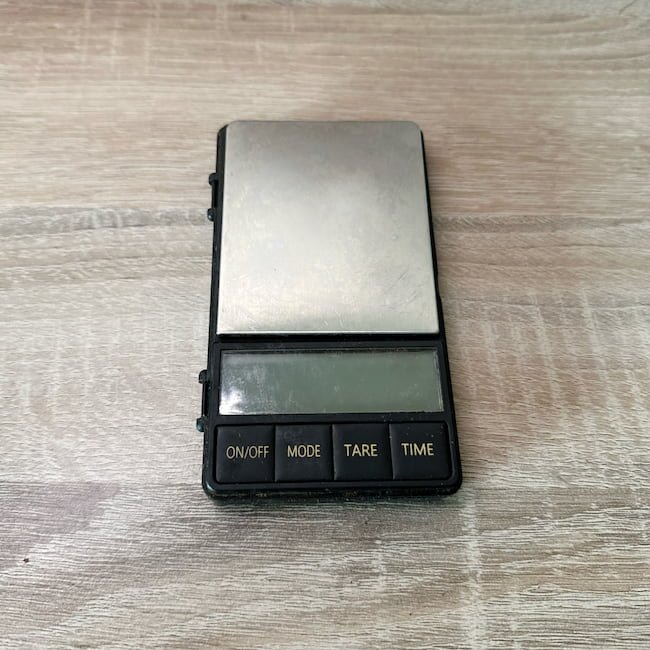
The Weightman espresso scale has become an underground cult favorite among espresso snobs in the know.
I will say that that this scale is slightly too small to be used as a pour over scale, however, for espresso it’s ideal.
(You can use for other types of brewing in a pinch, though — for example if you’re on holiday).
There aren’t many scales that have a built-in timer while also being small and slim enough to fit on a drip tray of a compact home espresso machine. This scale does all that while ALSO being affordable.
In daily life the scale is pretty fast, responsive, and accurate. I find that you have to cut your shot around 2 grams before your target weight, in order to get the timing right, so that’s pretty solid.
It offers units of grams or ounces and has an LCD backlit display for ease of reading.
It runs on 2x AAA batteries, and from my experience they will last a long time.
This scale also comes with a plastic cover, so you can bring it on a trip. I don’t think it’s waterproof per se, but it can take some splashes. I have had my unit for more than a year, and it’s still going strong.
Pros
- Great price
- Small enough to fit espresso machines like the Gaggia Classic or Breville Bambino
- Nice big display
Cons
- Build quality feels a bit cheaper, but that shouldn’t come as a surprise.
HUISMART DIGITAL SCALE
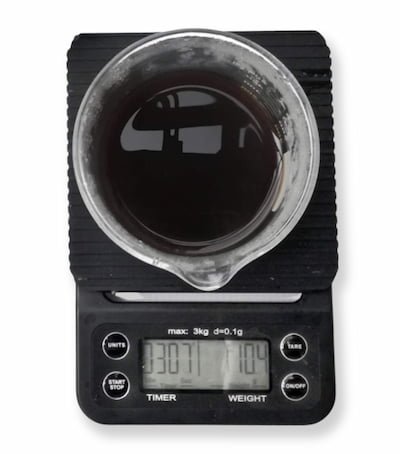
The HuiSmart coffee scale is a cheap but solid option.
It’s a popular option among people, who are just getting into pour over, but not yet ready to invest in one of the brand-name scales.
It does everything you’d expect, but a lot cheaper than the more premium models.
It has a built-in timer and offers units of grams, ounces, or pounds.
It’s also rather big, so it can double as a food scale.
The display is backlit, which is pretty nice on a dark morning.
It’s not the most stylish scale on the block, but I wouldn’t call it ugly.
It is powered by two AAA batteries, which allows for mobility in the kitchen. Battery power is preserved with an auto-off function and a low battery indicator.
This scale also comes with a silicon mat that allows you to cover the actual scale itself to prevent spills or other sources possible damage. This mat can then be taken off and cleaned separately for ease of use.
Pros
- Built-in timer
- Silicon mat for extra protection and durability
- Backlit display
- Good price
Cons
- A somewhat small display
- Runs on batteries
ACAIA LUNAR ESPRESSO SCALE
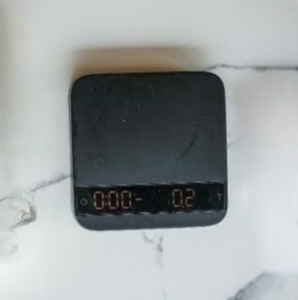
This is Pearl’s black brother. Packed with just as much cutting-edge technology but intended as an espresso scale instead. For that reason, it’s smaller and slimmer, so it fits perfectly in the crowded space under the cup and portafilter.
The Lunar is also built to withstand the hectic environment of a busy barista’s coffee desk. It’s both steam=, espresso- and waterproof, so you don’t have to worry about accidents.
However, the Lunar is a bit more expensive than the Pearl. So unless you’re a hardcore espresso fan, I’d recommend going for the other one.
Read a coffee shop owner’s review of the Acaia Lunar scale.
Pros
- Compact: Fits on an espresso tray
- Water-resistant
- Packed with functions
Cons
- Probably the most expensive coffee scale on the market
- Too small for some pour over contraptions
Related posts: Gooseneck Kettles for Pour Over
Our Coffee expertise & Credentials
- Asser Christensen earned his Q Grader license (certified coffee quality grader) in 2018, with recertification in 2021.
- The Q Grader exam requires passing rigorous blind tasting cupping protocols, as well as tests for identifying green bean and roasting defects.
- He has served as a sensory judge at roasting and coffee brewing competitions.
- Over the last 5 years, he has tested more than 50 different coffee grinders, as documented on this blog and his YouTube channel.